Why I no Longer Use Plastic Utensils In My Kitchen


For a long time, I didn’t think twice about plastic in my kitchen. It was convenient, affordable, and everywhere — from food storage to cooking utensils.
But over time, I started noticing small things. Scratches in containers. Cloudy lids. Warped utensils from heat. It made me pause and ask a simple question: what actually happens to plastic as we use it every day?
That question led me down a bit of a rabbit hole — and ultimately, to changing how I use my kitchen.
In this post, I break down why I no longer use plastic in my kitchen, including what happens as plastic wears down, how microplastics and chemical exposure can occur, and the easy swaps I’ve made using glass, wood, and stainless steel.
Want more low-tox content? Check out:
Basic explanation of components founds in plastic and their effects on our health:

What I Learned About What’s In Plastic
One of the biggest shifts for me was understanding that plastic isn’t just one simple material — it’s often made with added chemicals that serve specific purposes.
Phthalates, for example, are commonly used to make plastics more flexible. You’ll find them in things like plastic wrap, containers, and some utensils. The concern is that they can leach into food, especially when exposed to heat or fatty foods. They’ve been studied for their potential role in hormone disruption and other long-term health effects.
Then there are PFAS, often called “forever chemicals.” These are used to make materials resistant to heat, grease, and water — which is why they show up in things like nonstick coatings and certain food packaging. They don’t break down easily, and over time, they can accumulate in both the environment and our bodies.
Learning about these didn’t make me panic — but it did make me question my choices.
The Question Around Black Plastic Utensils
You may have heard that black plastic utensils are the “worst” — and while that’s a bit oversimplified, there’s some truth behind the concern.
Some black plastic products are made from recycled materials, which can include components from electronics. Because of that, they may contain flame retardants or other additives not intended for food contact. Under heat, there’s potential for these substances to migrate into food.
The tricky part is that there’s no easy way to tell which items are affected just by looking at them. For me, that uncertainty alone was enough to start phasing them out completely.
Source: https://www.ewg.org/news-insights/news/2024/12/your-black-plastic-spatula-serving-toxic-chemicals?
Source: https://www.poison.org/articles/black-plastic?
Where Plastic Shows Up the Most
Once I started paying attention, I realized how much plastic I was using daily:
Cutting boards
Food storage containers
Cooking utensils
Measuring cups
The good news? These are also some of the easiest swaps to make — without completely changing your lifestyle.
Wear, Tear, and What Happens Over Time

Plastic doesn’t stay in perfect condition — and that’s part of the issue.
Knife marks in cutting boards
Scratched, cloudy containers
Warping from heat
General breakdown with use
As plastic ages, it doesn’t just disappear — it breaks down into microplastics, tiny particles that have now been found in our water, food, and even the human body.
At the same time, plastics can release small amounts of additives like phthalates or BPA, especially when heated or worn down. And beyond plastic itself, persistent pollutants like PFAS are now widespread in our water systems, including aquifers.
It’s not one single exposure — it’s the accumulation over time that made me rethink things.
Food + Heat: The Turning Point
The moment it really clicked for me was realizing how often plastic comes into contact with:
Hot food
Oils
Acidic ingredients
Dishwashers and microwaves
Heat and friction speed up wear — and increase the chances of both microplastic shedding and chemical leaching.
That didn’t sit right with me, especially in a space centered around food and health.
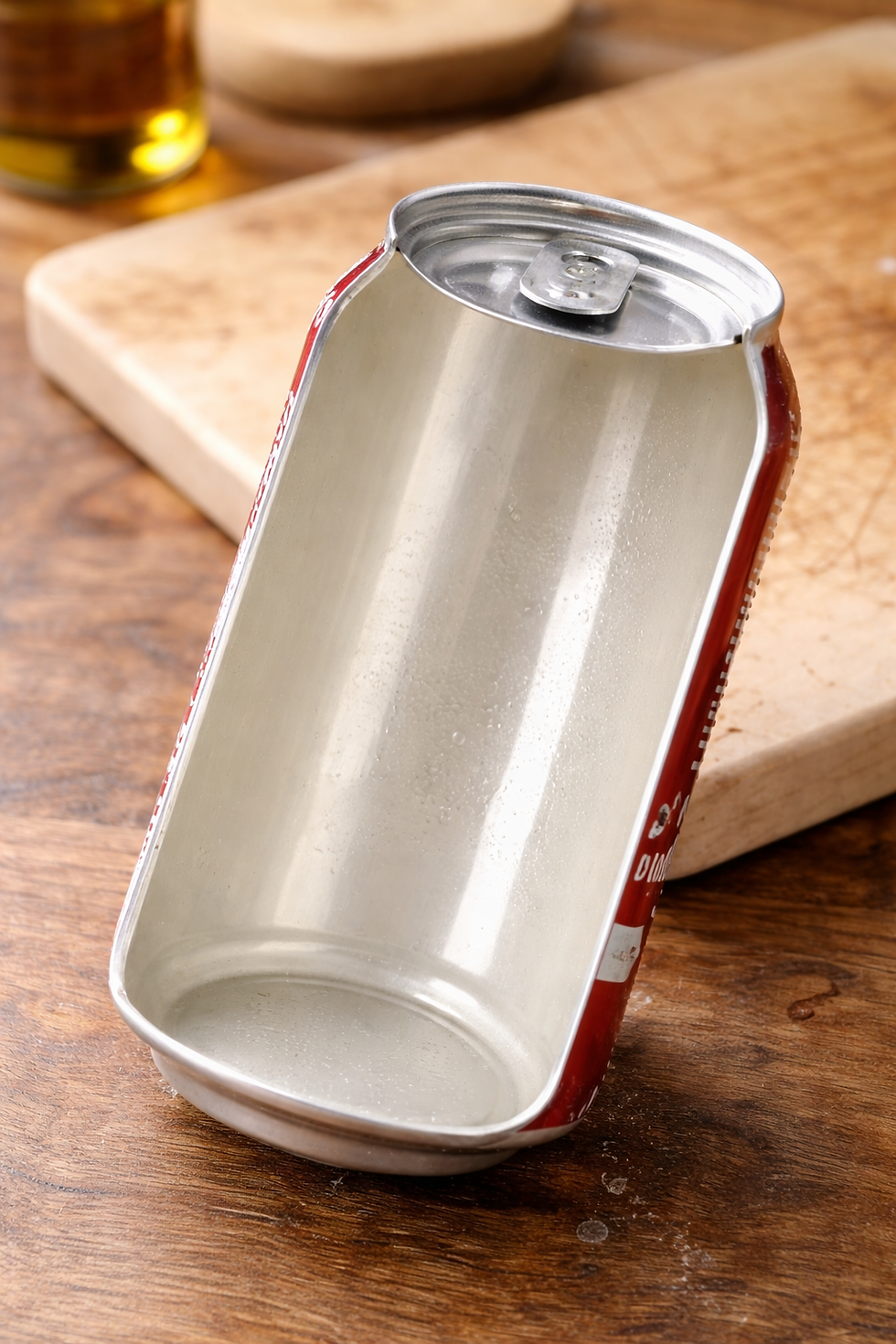
Are aluminum cans safe?
Another thing I hadn’t thought about for years is that even aluminum cans aren’t truly metal on the inside. Most are lined with a thin plastic coating designed to prevent corrosion and preserve flavor. While many brands have moved away from BPA, the alternatives aren’t always well studied. When you combine that with acidic drinks like soda, it adds another small but constant point of contact between food and synthetic materials — something I’ve started to pay more attention to.
What We Know About Microplastics
Research is still evolving, but one thing is clear: microplastics are now part of our environment.
They’ve been found in:
Drinking water
Packaged food
Airborne dust
Kitchen items like cutting boards and containers can contribute to that exposure over time. While the long-term health effects are still being studied, reducing avoidable exposure felt like a reasonable step.
The Bigger Picture: It Adds Up
This wasn’t about one plastic container or one utensil.
It was about the bigger picture:
Food packaging
Cleaning products
Fragrance
Everyday materials
Individually, they might not seem like a big deal. But together, they create a constant, low-level exposure.
I didn’t feel the need to eliminate everything all at once — just to reduce what I could, where it felt easiest for now.
What I Use Instead of Plastic Utensils
I didn’t overhaul my kitchen overnight. I just started swapping things out as time went by. The first thing I threw out: all my Teflon pans and all my plastic container.
Now I use:
Wood or bamboo cutting boards - I use this one.
When it came to swapping out plastic, cutting boards were one of the easiest places to start. There are a few great options, but I personally gravitated toward wood — especially higher-quality end grain boards, which are more durable, gentler on knives, and tend to “self-heal” from cuts over time. You can also find more budget-friendly edge grain or bamboo options that still work well. The one thing to know is that wood boards do require a bit of care — regular oiling (about once a week if you use them often) helps prevent cracking, keeps them from drying out, and extends their lifespan significantly. It’s a small habit, but one that makes a big difference in keeping them looking and performing their best.
Glass food storage containers
For food storage, I switched over to glass containers and haven’t looked back. I’ve personally been using the Rubbermaid Brilliance glass food storage containers, which I really liked for their clean look and tight seal — but they’ve become harder to find and seem to have gone up quite a bit in price lately. What I like most about them is their lids: they are all the same size so you always grab the correct one!
The good news is there are plenty of similar options out there. Most glass containers today are made from durable, heat-safe glass and come with airtight lids, making them great for everything from leftovers to meal prep. I like that they don’t absorb odors or stains the way plastic can, and they can go straight from fridge to microwave or oven (just not the lids). Even if the lids still contain some plastic, this swap dramatically reduces how much plastic actually comes into contact with your food.
Stainless steel and wooden utensils
A ton of options out there. I've noticed that Ikea recently started offering a lot more affordable options for stainless steels or wood (or both!) utensils. You can also find wooden spoons at the dollar store.
Some options from Amazon if you want to save a trip to the store:
7 Piece with 1 Stand : https://amzn.to/4tP79on
6 Pcs Teak Wood Utensil Set: https://amzn.to/4c6mhWR
Laddle from IKEA (Vardagen products are great!): https://www.ikea.com/ca/en/p/vardagen-ladle-stainless-steel-beech-40581474/
Cast iron or stainless steel cookware
When it comes to cookware, I’ve mostly transitioned to stainless steel and cast iron. Both are incredibly durable — the kind of pieces you can use for years (or even pass down) without worrying about coatings wearing down over time. (We have both at home and I currently use Lodge brand for my cast iron.) That said, there is a bit of a learning curve. Stainless steel can stick if you don’t preheat it properly, and cast iron requires seasoning and a different approach to cleaning. But once you get the hang of it, they’re surprisingly easy to use and incredibly reliable. For me, it felt like trading a bit of convenience upfront for long-term simplicity and peace of mind.
Cost Over Time
One of the biggest surprises? This shift didn’t end up being more expensive.
Because I’m replacing things less often, and choosing materials that last longer, it’s actually balanced out over time.
It’s easy to brush things off as “it’s only a small amount.” And maybe it is — once. But when those small exposures happen daily, across multiple areas of life, they stop feeling so small. I’m not aiming for perfection, but I am paying more attention — especially in the kitchen, where what I use comes into direct contact with what I eat.