
Why I Removed Synthetic Fragrance From My Low-Tox Fragrance-Free Home

Updated: Apr 10
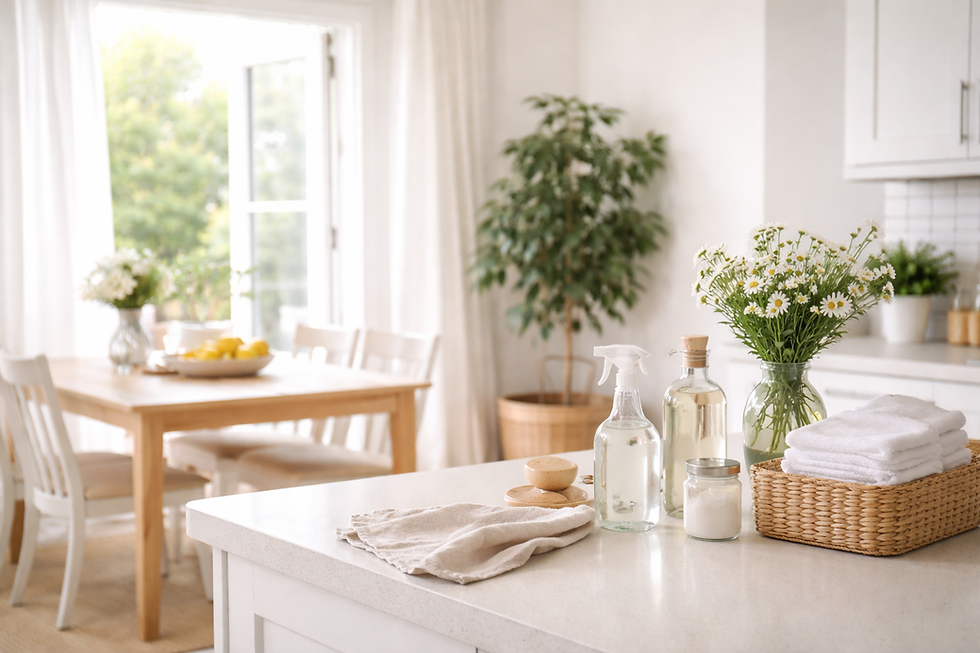
I didn’t switch to a low-tox, fragrance-free home overnight. At first, nothing felt obviously wrong — I used plug-ins, candles, scented laundry detergent, and body care products like everyone else. My home smelled “clean.” But over time I started noticing headaches, fatigue, and a constant overstimulated feeling I couldn’t quite explain. It wasn’t one product causing the problem — it was the cumulative effect of fragrance layered into every corner of daily life. Hearing Dr. Shanna Swan speak about phthalates and endocrine disruption on the Joe Rogan Experience podcast sent me down a research rabbit hole, and I realized fragrance doesn’t automatically mean clean — and “unscented” doesn’t always mean safe. Once I understood that, I couldn’t ignore it.
Make sure to check out my other low-tox posts:
The Label Realization
The real turning point for me was reading labels more closely and realizing how vague the word “fragrance” actually is. It sounds harmless, but it’s often a catch-all term that hides dozens — sometimes hundreds — of undisclosed chemicals protected under trade secret laws. I started to recognize how little transparency there was and how I truly didn’t know what I was breathing in every day.
One group of chemicals that kept coming up in my research was phthalates. Phthalates are commonly used to make fragrances last longer and help scents “stick” to products, and they’re often hidden under the single word “fragrance” or “parfum” on ingredient lists. That means you usually won’t see them listed individually, making it nearly impossible to know exactly what’s inside a scented product.
Studies to support
There is growing scientific evidence that phthalates — the chemicals often hidden under the term “fragrance” or “parfum” on labels — can interfere with the body’s hormonal systems. Research shows that phthalates act as endocrine disruptors and are linked with altered reproductive processes in both males and females, such as changes in hormone levels and developmental markers connected to reproductive health.
One human study led by Dr. Shanna H. Swan found that higher phthalate exposure during pregnancy was associated with shorter anogenital distance (the taint) in baby boys, a marker researchers use to assess early reproductive development. These studies do not prove that everyday exposures cause disease in every individual, but they do provide evidence that phthalates can affect hormone activity and reproductive endpoints in humans and animal models.
Study links:
How People Are Commonly Exposed

Most people are exposed to synthetic fragrance far more often than they realize. It’s in plug-ins and air fresheners running throughout the day, candles burning in the evening, laundry detergent and fabric softener clinging to clothing and bedding, body care products applied directly to the skin (especially deodorants where lymph nodes are present), and even the cleaning sprays used on countertops and floors. Individually, these exposures may seem small — but layered together, they create a constant, everyday chemical load inside the home.
If interested in hearing more, here's a link to "Plastic “Tox” Episode 1: Plastics & Health – Are Phthalates Making Us Infertile? With Dr. Shanna Swan"
A Few Easy Swaps
Over time, I began choosing simpler alternatives in our home. Homemade cleaning products scented lightly with pure essential oils, beeswax candles instead of synthetic air fresheners, and simple staples like baking soda to absorb odors have replaced the heavily fragranced products I once used. These small changes helped me create a home that feels clean without relying on artificial scent.
Why I Made the Switch to a Low-Tox Fragrance-Free Home
Switching to a fragrance-free, low-tox home wasn’t about fear — it was about clarity. Reducing the constant layer of synthetic scents cut down on sensory overload, simplified daily routines, and even saved money by not constantly buying scented products. It also meant less waste, since fewer single-use or disposable items were needed. Making the switch isn’t about perfection; it’s about creating a calmer, healthier space that feels intentional. Later, I’ll share some more of the simple alternatives I use to keep my home fresh — nothing toxic, nothing overpowering. Stay tuned!


