How to Save Money on Groceries: 13 Simple Ways
Updated: Mar 2
This post contains affiliate links. I may earn a small commission at no extra cost to you.
Grocery prices continue to rise in Calgary and across Alberta, and for many households, food is one of the biggest monthly expenses.
If you’re looking for practical ways to save money on groceries without sacrificing quality or eating boring meals, these 13 proven tips actually work in real life.
1. Don’t Go to the Grocery Store Unless You Need To
Every trip to the grocery store increases the chance of impulse purchases and “great deals” you didn’t plan for.
Fewer trips = less spending.
2. Make a List and Stick to It
A grocery list keeps you focused and reduces overspending.
If sticking to a list is difficult, consider:
Ordering online
Using grocery pickup
Having groceries delivered
This removes temptation and helps you stay on budget.
3. Look for Real Grocery Deals (Not Just Sales)
Not every sale is a good deal. Saving $1 per pound or 70 cents on a $5 item isn’t significant.
I aim for 40% off or more whenever possible.
Here in Alberta, flyers usually change on Thursday, with previews available on Wednesday. Planning your shopping on Wednesdays lets you compare current and upcoming sales.
If you find a great deal on produce (like berries) but don’t need it right away, freeze it after washing and decide later how to use it.
(A dedicated post on finding great deals is coming soon.)
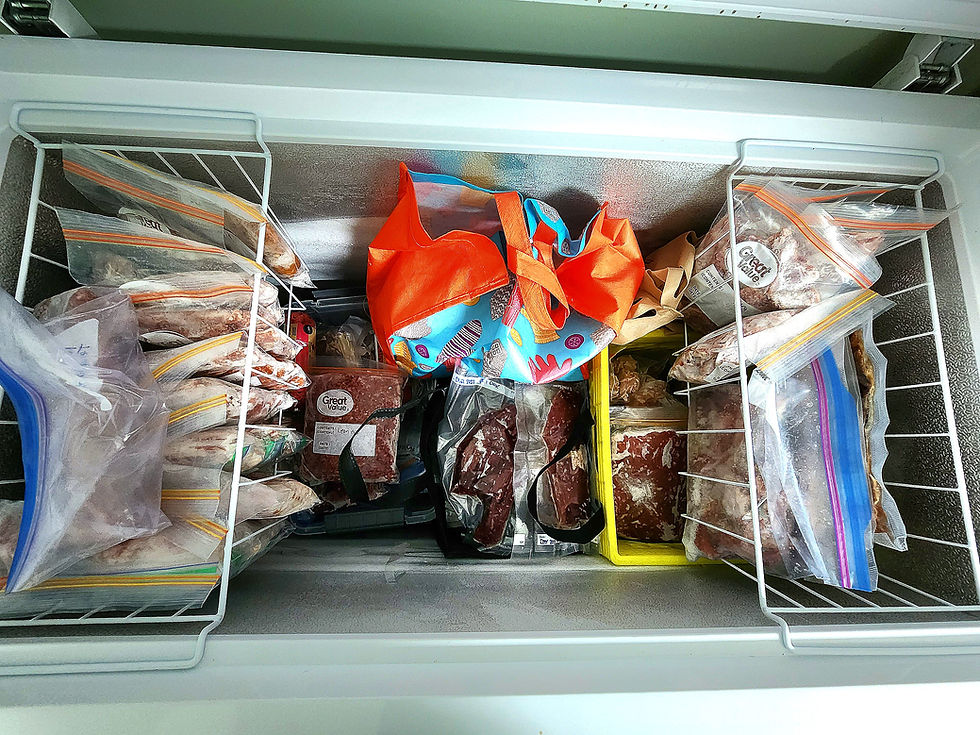
4. Buy Discounted Meat and Freeze It Immediately

There’s no shame in buying discounted meat.
Cook it the same day or freeze it immediately. It’s an excellent way to:
Stock your freezer
Meal prep in batches
I often find the best discounted meat deals on Tuesdays and Wednesdays, right before weekly sales change.
5. Buy in Bulk or Larger Packages (When It Makes Sense)
Always check the unit price (price per gram, ml, or item).
Larger packages usually cost less per unit, but not always — especially if a smaller size is on sale. Do a quick comparison before adding it to your cart.
Buying larger quantities costs more upfront, but saves money long-term if you have the storage space.
6. Buy Ingredients, Not Convenience Foods
Raw ingredients are cheaper and more versatile than pre-made foods.
Buying basics like oats, flour, and produce allows you to:
Cook multiple meals from the same ingredients
Control what goes into your food
Build a pantry filled with items you actually use
Yes, it takes more effort — but the savings add up quickly.
7. Choose Store Brands for Pantry Staples
For basics like:
Flour
Sugar
Oats
Pasta
Store brands are usually the most budget-friendly option.
Unless you need specialty items (organic, gluten-free, glyphosate-free), the no-name brand is often just as good a price.
(I will make a post for organic/cleaner products later)
💡 Tip: Costco has excellent prices on large bags of all-purpose and bread flour.
8. Skip Paying for Convenience and Food Processing
You’re often paying extra for convenience.
Processing food yourself is usually cheaper and lets you control ingredients. For example, I make homemade fruit popsicles instead of buying packaged ones.
DIY food = more savings.
9. Compare Prices on Steaks vs. Roasts
Steaks often come from the same cut as roasts — but cost significantly more.
Buy a roast and slice your own steaks at home to save money.
10. Stock Up on Non-Perishables
If you have the space, stock up on items that last:
Pasta
Rice
Oats
Oil
Honey
Buying now at today’s prices protects you from future price increases.
11. Know Your Prices
Knowing the average price of the foods you buy helps you recognize a good deal instantly.
Prices fluctuate constantly, so it’s harder than it used to be — but even a general awareness helps prevent overpaying.
If you don’t know what something normally costs, you won’t know when it’s actually on sale.
12. Cook in Batches
It takes the same time and energy to cook:
2 chicken breasts
or 10 chicken breasts
Use your oven and appliances efficiently by cooking in larger batches and storing leftovers or freezer meals.
13. Use an Instant Pot
An Instant Pot saves time, energy, and money.
It:
Cooks quickly
Uses less electricity than an oven
Is incredibly versatile
I use mine regularly for:
Soups
Rice
Hard-boiled eggs
Chicken breasts
Amazon link: https://amzn.to/4s4jcOy
Final Thoughts
Saving money on groceries doesn’t mean cutting corners — it means shopping intentionally.
By using even a few of these 13 grocery-saving tips, you can lower your food bill, reduce waste, and feel more in control of your budget.
👉 Don’t forget to check out: