How to Reduce Food Waste at Home (10 Simple, Practical Ways)
- Dec 15, 2025
- 4 min read
With grocery prices rising across Calgary and Alberta, many of us are looking for practical ways to save money and reduce food waste—without spending hours in the kitchen.
Whether you’re feeding a family or cooking for one, learning how to reduce food waste at home can significantly lower your grocery bill and make meal planning feel less stressful.
Below are 10 realistic, easy ways to reduce food waste that actually work in real life.
This post contains affiliate links. I may earn a small commission at no extra cost to you.
👉 For more similar content, check out:
Use Vegetable Scraps to Reduce Food Waste

Instead of tossing vegetable scraps, save them to make a simple homemade vegetable broth.
I keep a freezer bag filled with:
Onion peels and ends
Garlic skins
Carrot peels
Celery ends
Zucchini and sweet pepper scraps
Green onion ends
When it’s full, I simmer everything with salt, pepper, bay leaves, and herbs.
Once strained, you can:
Use the broth immediately for soups or rice
Drink it as-is
Freeze it in jars, silicone molds, or freezer bags for later
Can it

You can do the same with bones! Keep your bone scraps (chicken carcasses, turkey carcasses, meaty beef bones, etc) and you can make bone broth with it.
Store Food in Single Portions
Packaging food in single-meal portions makes it far more likely you’ll actually eat it.
When food looks organized and appealing in your fridge, it’s easier to grab—especially on busy weeknights. I like creating grab-and-go containers for snacks and meals.
This is especially important for freezing food. For example, freezing a whole value pack of chicken breasts in one bag doesn’t work well if you’re only cooking for one or two people.
Containers I Use
I prefer glass containers (Rubbermaid Brilliance, in particular) because they last longer and don’t absorb smells.
3.2-cup containers – perfect for one meal [Link Here]
8-cup containers – great for marinating meat, thawing, or storing leftovers [Link Here]
Don’t Plan Meals Too Far Ahead
Instead of planning an entire week in advance, use a flexible “rolling meal plan.”
This approach works well for busy families and changing schedules. Pulling too much meat from the freezer at once often leads to forgotten food sitting in the fridge—and eventually going bad.
Freeze Leftovers in Individual Portions

Freezing leftovers in portions is one of the easiest ways to reduce food waste.
Portion meals so your future self has quick, ready-to-heat options.
The dollar store has foil containers that can hold a large portion or 2 portions, depending on the person. I like to freeze things that will reheat well in the oven in those containers - sheperd's pie, lasagna, etc.
I usually freeze leftovers in silicone molds , then remove them once frozen.
Depending on how long they’ll be stored, I may vacuum seal them for extra protection.
Here is the vacuum sealer link [Link Here]
Prep Produce Properly So It Lasts Longer
Proper produce prep can make a huge difference in how long fruits and vegetables stay fresh.
Here’s what works well in our household:
Leafy greens: Rinse, dry, and store between paper towels
Celery: Chop and store in cold water (change every few days)
Carrots: Prep and store in cold water for snacking
Strawberries: Soak in water and white vinegar, dry well, remove stems, store with paper towel
Grapes: Wash with salt or baking soda, rinse, dry, store with paper towel
Green onions: Store upright in a glass with 1–2 inches of water
Be Flexible With Recipes
You don’t need to follow recipes exactly to get good results.
Swapping ingredients helps you use what you already have and avoid buying something you’ll barely use. For example:
Yogurt instead of sour cream
Frozen vegetables instead of fresh
Cream cheese instead of heavy cream
Keep a Freezer Inventory List
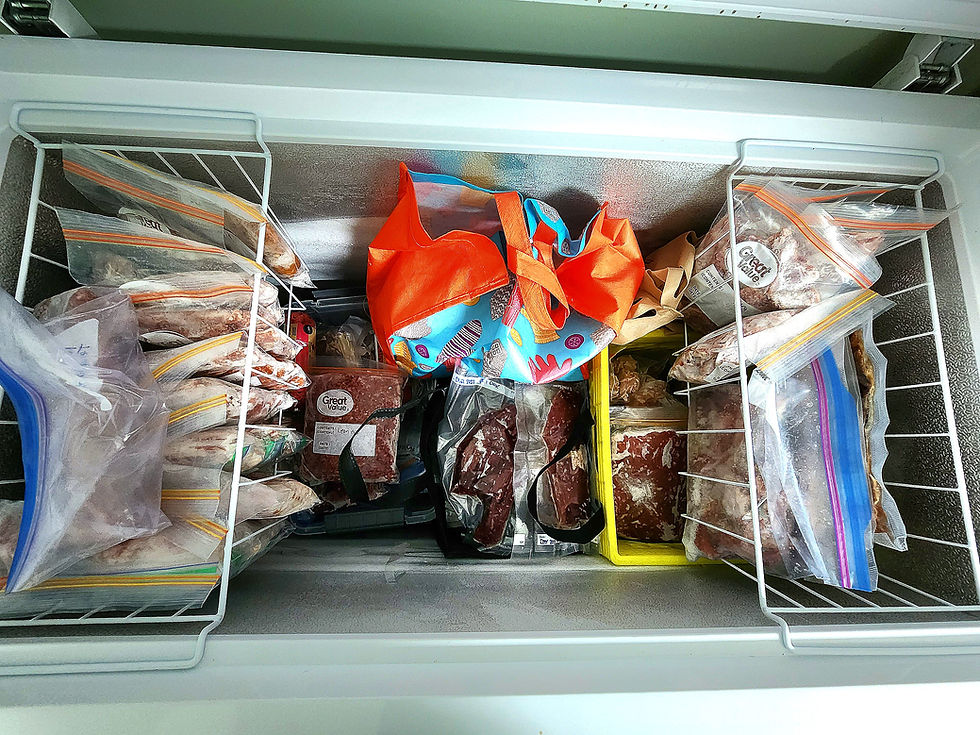
It’s easy to forget what’s in the freezer—especially chest freezers.
A simple inventory list helps prevent freezer burn and wasted food. You can:
Tape a paper list to the freezer
Draw a bin layout
Track quantities
A dry-erase magnetic board [Link Here] works especially well.
Freezing Food Is One of the Easiest Ways to Reduce Food Waste
Freezing food is a great way to reduce waste when you’re unsure what to do with it.
Examples:
Whole tomatoes (great for soups and sauces)
Yogurt and sour cream (best for cooking or baking after freezing)
🚫 Avoid freezing noodles in broth—they become mushy when thawed.
See my post on this particular topic: How to know what freezes and what doesn't
Use Portion-Freezing Molds

Similar to #4, silicone portion molds (like Souper Cubes) freeze food in 1-cup or 2-cup portions, making leftovers easy to store and vacuum seal.
Souper Cubes brand molds:
1-cup - https://amzn.to/4qgYzgl
2-cup - https://amzn.to/4jiAwLL
They’re ideal for:
Soups
Sauces
Stews
Meal prep
Invest in a Vacuum Sealer
A vacuum sealer can dramatically extend the life of food in your freezer by preventing freezer burn.
You can often find good deals at Costco or Canadian Tire here in Alberta.
Tip: Avoid vacuum sealing sharp bones or shrimp with tails—they can puncture bags and break the seal. I've found out the hard way...
Reducing food waste at home doesn’t require extreme changes—just a few smart habits.
By using these 10 simple food-waste-reduction tips, you’ll:
Save money on groceries
Waste less food
Feel more organized in your kitchen